Water Damage Restoration Nevada provides water damage restoration for homes, ranch properties, rental homes, offices, retail spaces, workshops, commercial buildings, and managed properties in Spring Creek, NV. We review accessible areas affected by water, discuss cleanup and drying requirements, assess damaged materials, and explain restoration work that may be needed after plumbing leaks, burst pipes, appliance failures, water-heater leaks, roof leaks, overflows, sewage events, flood damage, and other water-related property losses.
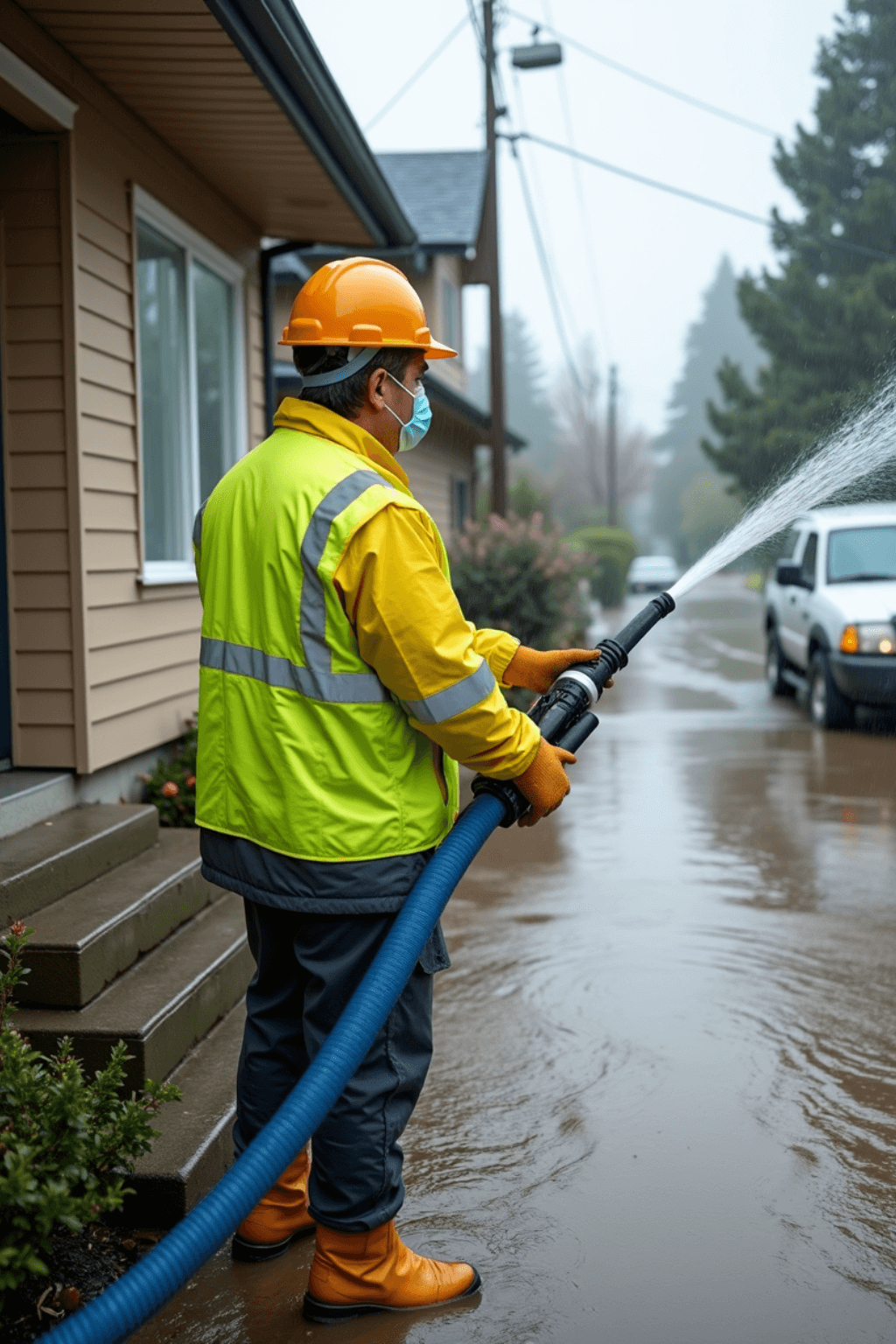
Water can travel through flooring, wall materials, cabinets, insulation, ceilings, and adjoining rooms after a leak, overflow, appliance failure, or broken pipe begins. Early priorities include identifying the source, preventing more water from entering when it is safe to do so, and determining which accessible materials may have absorbed moisture.
The required work depends on where the water came from, how far it moved, the materials involved, and whether contamination is a concern. A slow plumbing leak, failed appliance hose, water-heater leak, toilet overflow, broken supply line, or roof-related water intrusion can each lead to different cleanup, drying, and repair needs.
Keep people and pets away from standing water near outlets, appliances, exposed wiring, or sagging ceilings. Avoid potentially contaminated water and damaged materials. If it is safe, stop the source and move unaffected belongings away from the wet area.
Need Water Damage Help in Spring Creek?
Discuss the next step for water removal, drying, cleanup, and repairs.
Water restoration work is based on the reported loss and the condition of accessible materials. A proposed scope may include water extraction, drying equipment, moisture checks, cleaning, material removal, debris handling, and identifying repair work after affected areas have been addressed.
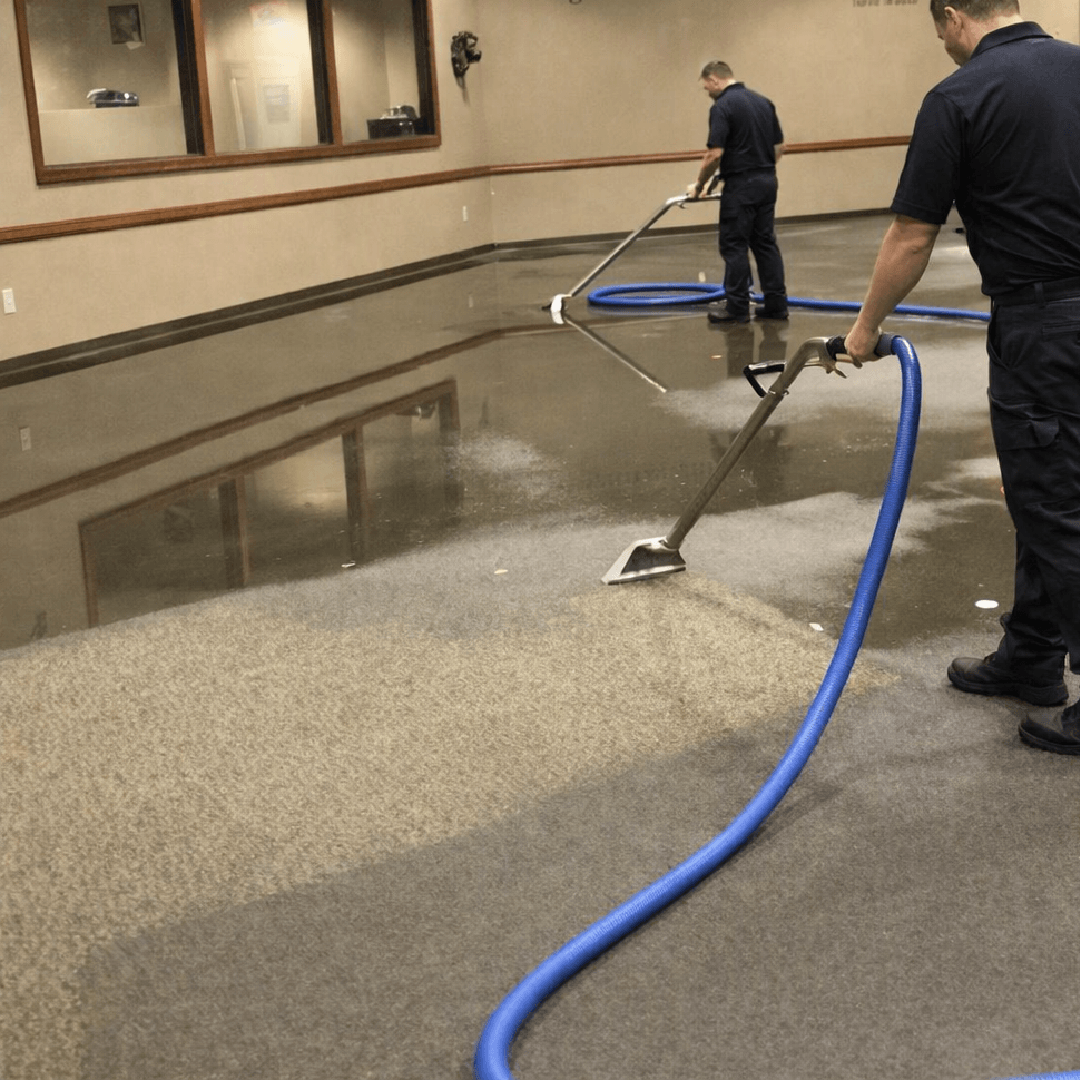
Water removal addresses standing water and wet surfaces that can be reached safely. Carpet, padding, laminate, hardwood, vinyl, tile assemblies, drywall, cabinets, storage areas, furniture, and business contents can react differently to water exposure. The approach depends on the material type, amount of water, and the route water took through the property.
Flood cleanup may be required after exterior water entry, drainage or plumbing failures, roof leaks, overflows, or events affecting more than one area. Water can reach lower walls, flooring systems, insulation, storage areas, garages, and contents. The water source and condition of affected materials guide the cleanup, drying, and restoration plan.
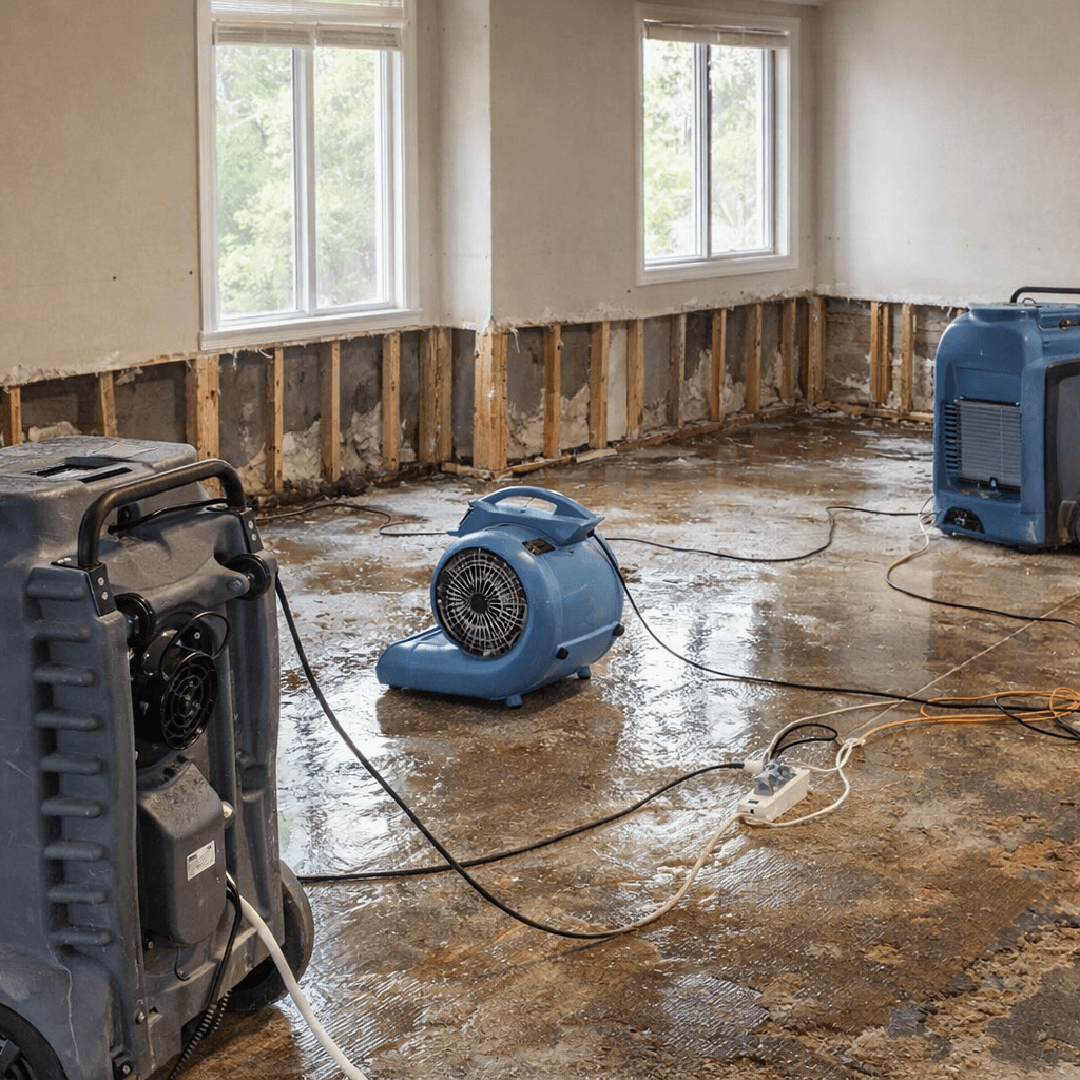
Water mitigation addresses moisture that remains after the source and visible water have been dealt with. Drying work may involve air movement, dehumidification, monitoring, and reviewing accessible building materials to determine whether continued drying, additional access, cleaning, or removal should be considered.
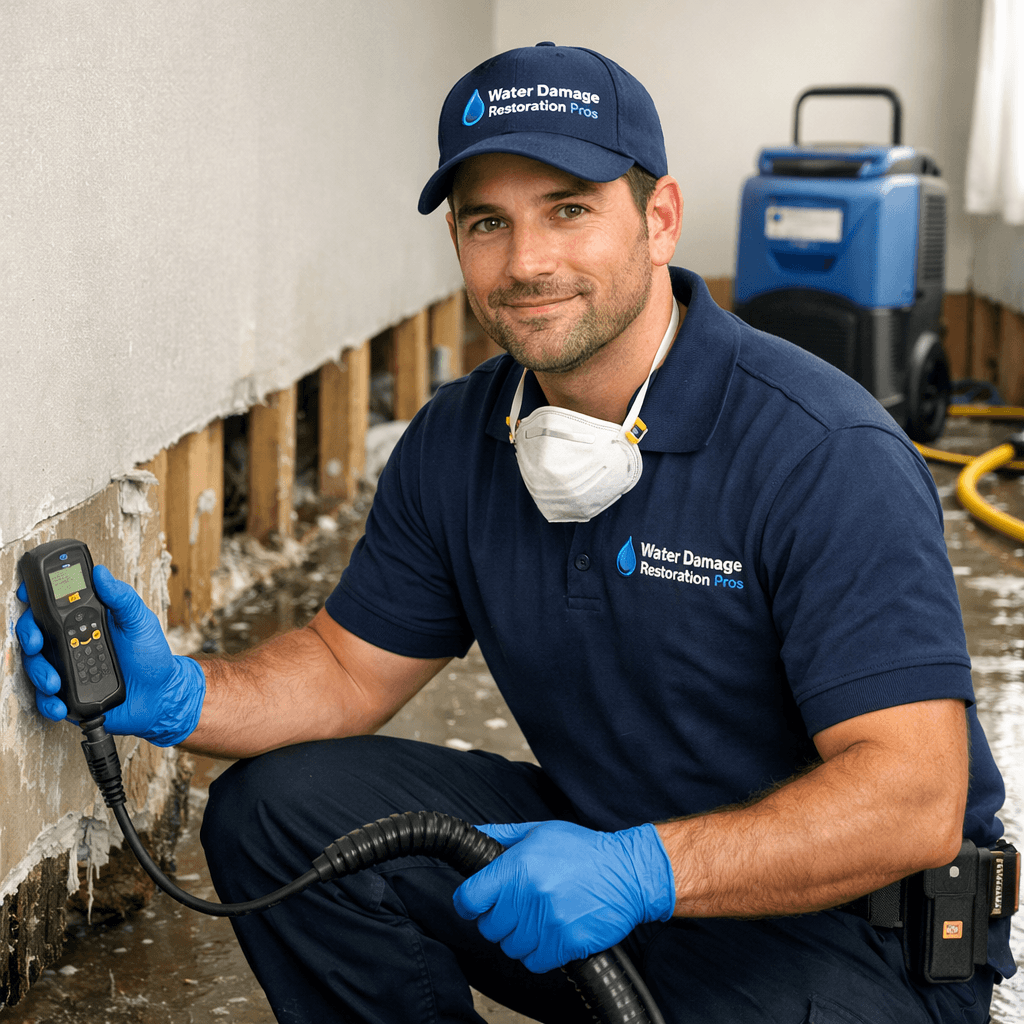
Some materials can be cleaned and dried, while saturated, contaminated, deteriorated, or inaccessible materials may require removal. Material decisions depend on the water source, material type, moisture conditions, visible damage, and whether the affected area can be dried effectively.
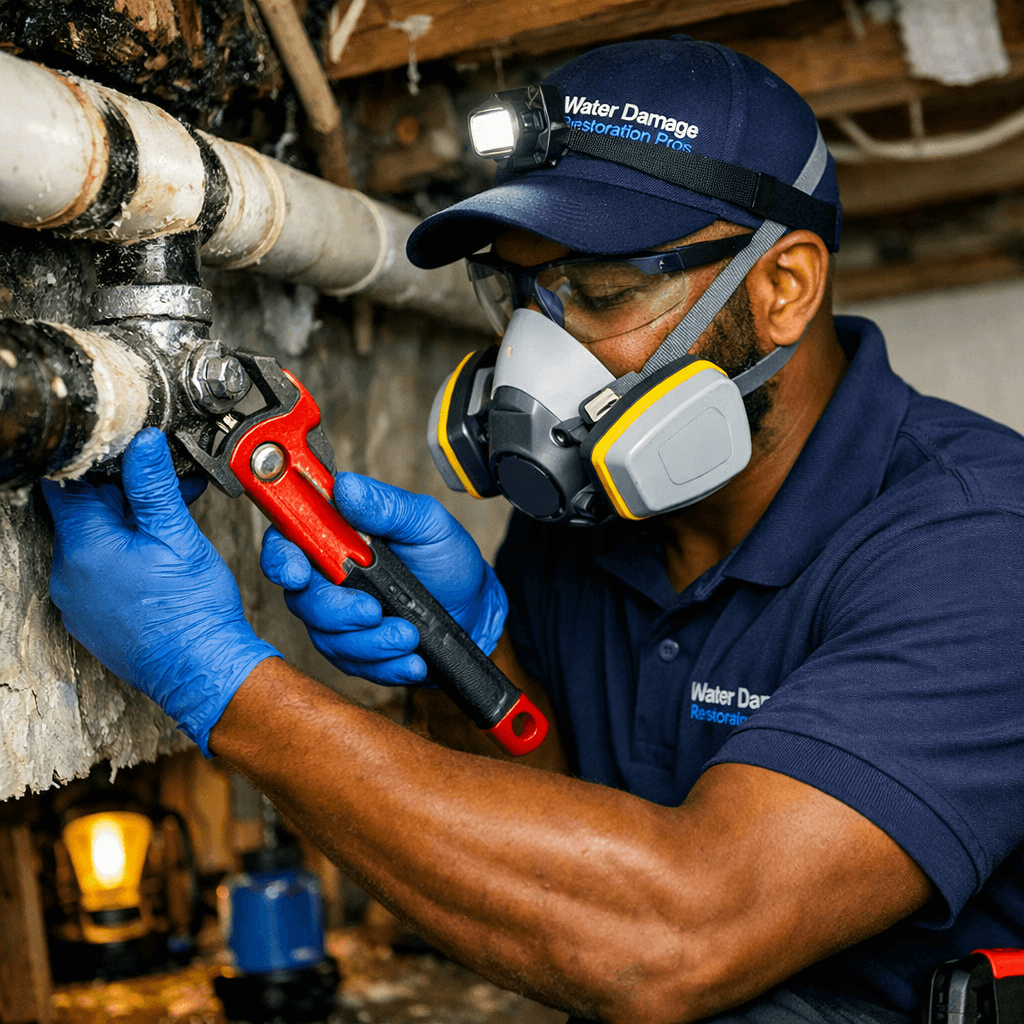
After cleanup and drying, restoration may involve drywall and ceiling repair, flooring work, trim replacement, cabinet repair, painting, and rebuilding materials removed during the project. Plumbing, roofing, electrical, or other source repairs may require the appropriate trade.
Water damage can start suddenly after a failure or develop over time from a leak that remains hidden. The origin of the water, its travel path, material type, and length of exposure influence the cleanup, drying, and repair work that may be needed.
Leaking valves, pipe breaks, failed supply lines, and water-heater issues can affect kitchens, bathrooms, laundry rooms, utility spaces, garages, and nearby rooms. Water can move into flooring systems, cabinets, walls, and ceiling areas below the original leak.
Dishwashers, washing machines, refrigerators, toilets, sinks, tubs, and showers can cause water damage when a connection fails, a drain backs up, or a fixture overflows. Even a smaller water event may affect floor coverings, cabinet bases, drywall, and materials in an adjoining room.
Water may enter through damaged roofing, flashing, vents, windows, doors, or exterior openings. Stains, ceiling drips, wet insulation, and damp flooring may be visible signs, but moisture can move beyond the original entry point and affect other materials.
Spring Creek offices, retail spaces, workshops, managed properties, and commercial facilities may need a restoration plan that considers building access, occupied areas, tenant coordination, stored equipment or inventory, operating schedules, and property-management requirements. A commercial water loss can affect one room, multiple offices, common areas, storage spaces, or operational areas.
Sewage backups and potentially contaminated water require added precautions. Cleanup may involve removing affected porous materials, cleaning accessible surfaces, sanitation, drying, debris handling, and planning repairs after the affected areas have been addressed.
Request water damage help
Provide the property address, the likely source of water if known, the rooms affected, and whether water is still entering the property.
Each water loss is evaluated according to the water source, material conditions, moisture levels, property layout, and available access. A small laundry-room leak and water affecting a commercial building, storage room, detached structure, or several rooms require different cleanup and drying decisions.
STEP 1
During the first conversation, describe the property type, where water is visible, the suspected cause, affected rooms, and whether the water source remains active. Mention electrical hazards, sewage concerns, roof damage, ceiling issues, restricted access, tenant occupancy, stored contents, business operations, or property-management requirements.
STEP 2
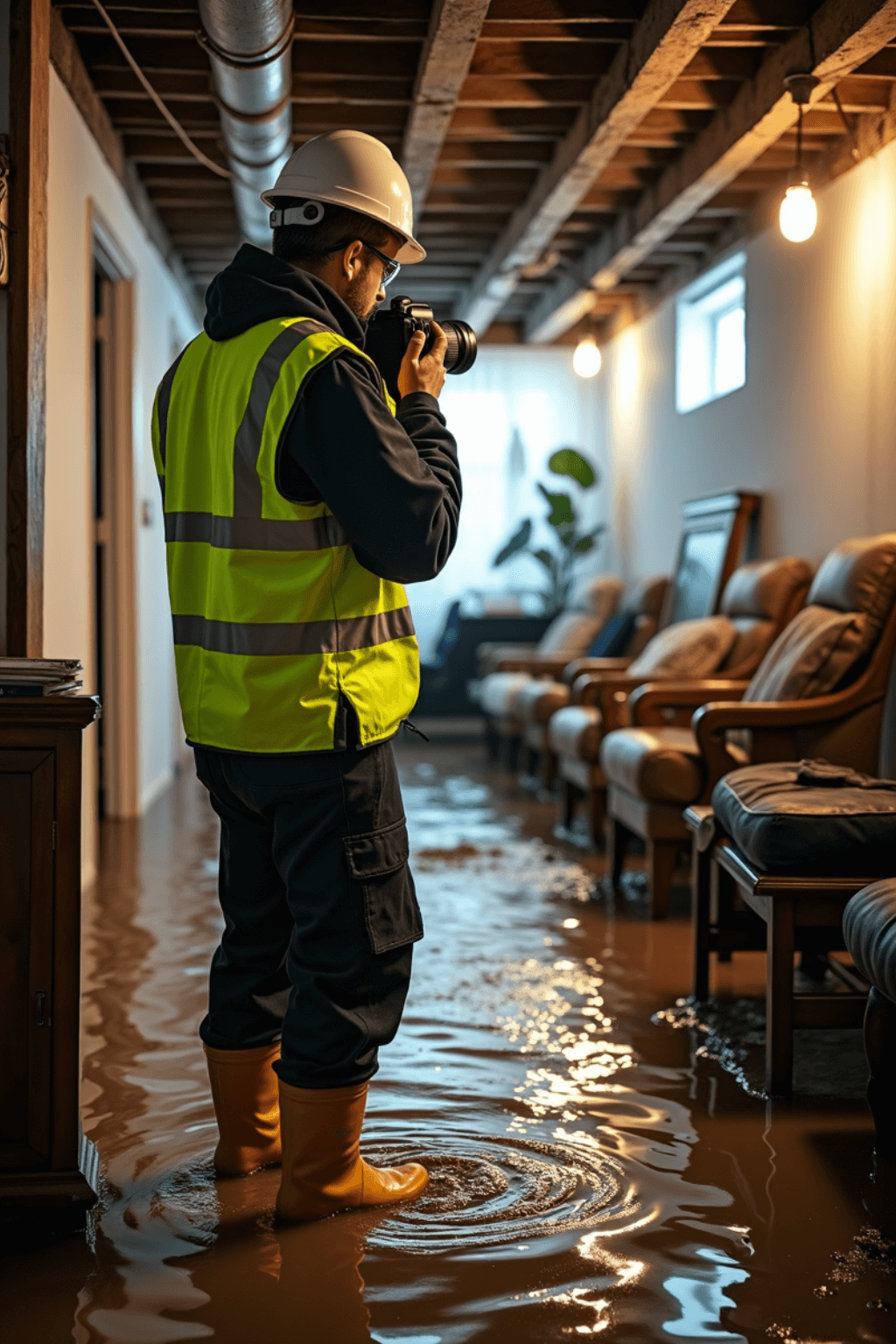
Accessible rooms and materials are reviewed for visible water, staining, dampness, and signs that moisture may have moved beyond the original source. Findings help identify areas that may require extraction, drying, cleaning, material removal, or further evaluation.
STEP 3
Standing water is addressed according to the affected surface and conditions. Drying equipment may be used to help reduce remaining moisture in accessible materials. Equipment placement depends on room layout, material type, airflow, humidity, moisture conditions, and access.
STEP 4
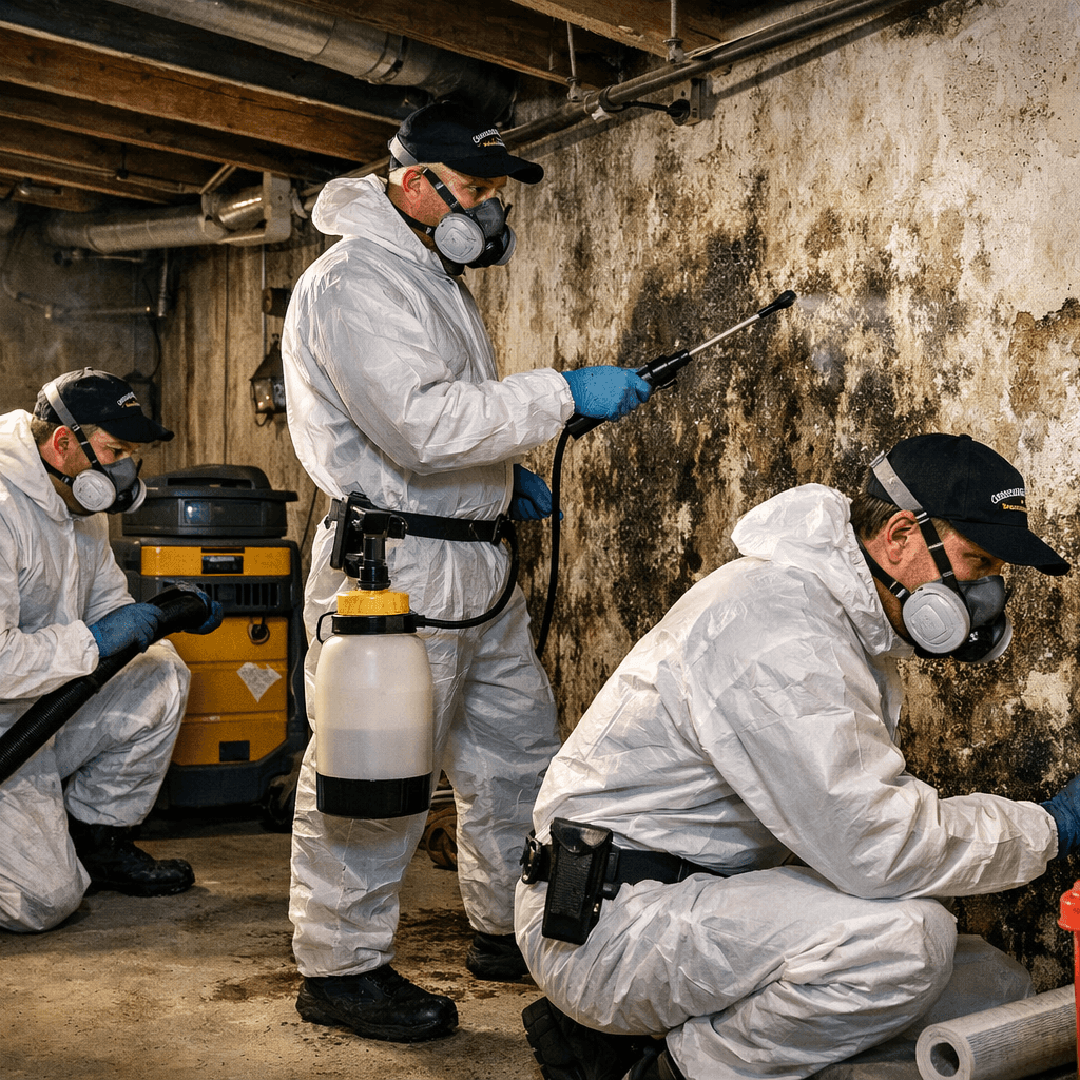
After affected materials are reviewed, the restoration plan may include cleaning, sanitation where appropriate, selective removal, debris handling, and preparation for repairs. If visible mold or mold-like growth is present after moisture exposure, that condition should be evaluated as part of the moisture-related restoration plan.
STEP 5
Follow-up moisture checks help evaluate drying progress in accessible areas. Once the agreed cleanup and drying work is complete, remaining repair, replacement, or source-correction needs can be identified for the property owner, manager, or responsible party.
Water removal addresses standing water, while structural drying addresses moisture that can remain in flooring, walls, ceilings, insulation, cabinetry, trim, and subflooring after extraction. Both steps matter because materials may remain damp even when the surface appears dry.
Moisture readings and visual observations help identify accessible materials that may still contain water. The assessment considers the water source, probable travel path, material type, and signs of moisture beyond the immediately visible affected area.
Air movers and dehumidifiers may support drying where appropriate. The equipment plan depends on the materials involved, room size, airflow conditions, humidity, moisture readings, and access to affected areas.
Follow-up checks help determine whether accessible materials are drying as expected or whether further drying, material removal, investigation, or repair planning should be considered.
Repair work is considered after cleanup and drying provide a clearer picture of affected materials. The required scope depends on whether materials can be retained, cleaned, repaired, or replaced because of their condition or ability to dry effectively.
Drywall, ceiling materials, insulation, wall cavities, trim, and related components can retain moisture after a water event. Accessible materials are reviewed to determine whether drying and cleaning are appropriate or whether sections should be removed before rebuilding.
Carpet, padding, hardwood, laminate, vinyl, tile assemblies, adhesives, and subfloor materials can be affected by water. The restoration approach depends on material condition, water category, moisture findings, duration of exposure, and whether the assembly can dry effectively.
Lower cabinets, baseboards, furniture, shelving, built-ins, stored belongings, tools, equipment, business inventory, and other materials near floor level can be affected by water movement. Accessible items within the work area can be reviewed for cleaning, drying, repair, removal, or replacement needs.
Water Damage Restoration Nevada accepts inquiries for water-related property damage at homes, ranch properties, rental homes, offices, retail spaces, workshops, commercial buildings, and managed properties in Spring Creek, NV. Contact us about plumbing leaks, broken pipes, appliance failures, overflows, water-heater leaks, roof leaks, sewage backups, flood damage, and other water intrusion concerns.
Property owners, tenants, managers, and commercial contacts can provide the property address, water source if known, affected rooms or work areas, and any safety or access concerns. This information helps determine the next step for the reported water loss.
For water damage restoration information in nearby Nevada communities, visit our pages for Elko, Winnemucca, Fallon, Fernley, Carson City, and Reno.
Need Help With Water Damage in Spring Creek?
Tell us where the water entered the property, which areas may be affected, and whether there are access, tenant, management, commercial-operation, detached-building, or safety concerns.
Find answers to common questions about water cleanup, flood restoration, water removal, drying, repair planning, and water damage services in Spring Creek.
Water damage should be assessed as soon as it is safe and practical. Tell us whether water is still entering, which areas are affected, and whether electrical or contamination concerns are present. We can discuss current availability and appropriate assessment arrangements.
The scope depends on the water source, affected areas, material types, moisture conditions, access, extraction needs, cleaning requirements, drying work, debris handling, and repairs. Contents handling, source corrections, testing, and specialist services may be separate from the restoration scope.
Commercial water damage restoration may involve water extraction, drying, cleaning, material decisions, repair planning, and coordination around access, occupied areas, business operations, tenant spaces, common areas, storage locations, and equipment. The actual scope depends on conditions at the property.
Whether a material can be retained depends on its type, moisture level, water category, duration of exposure, visible deterioration, contamination concerns, and ability to access and dry the material effectively.
Water damage restoration may be planned for rental homes, offices, retail spaces, managed facilities, commercial buildings, and other residential or business properties. The work may require coordination with occupants, managers, owners, maintenance personnel, tenants, or other parties connected to the property.
Drying time depends on the materials affected, amount of water, temperature, humidity, airflow, moisture levels, access, and how water traveled through the property. Follow-up checks help determine whether drying is progressing or whether further steps should be considered.
Stay away from standing water near electrical equipment, contaminated water, and unstable ceilings. If safe, stop the water source and move undamaged belongings away from affected areas. Take photos of visible conditions, note where water began, and share information about access, occupants, stored contents, business operations, or property-management requirements.